


Few pavement problems are more frustrating than repairing a pothole only to see a depression, cracking, or another hole appear in the exact same place weeks or months later. Although a patch can restore the asphalt surface, it may not solve problems with drainage, the road base, compaction, or weakened materials beneath the pavement. Understanding why potholes keep coming back after asphalt repairs is essential for choosing a repair method that addresses the root cause rather than simply covering the visible damage.
Professional asphalt repair indiantown fl should begin by evaluating more than the bottom of the pothole. The surrounding asphalt, base condition, water movement, traffic loads, and type of pavement failure all matter. Without that evaluation, filling potholes can become an expensive patch-and-repeat cycle.
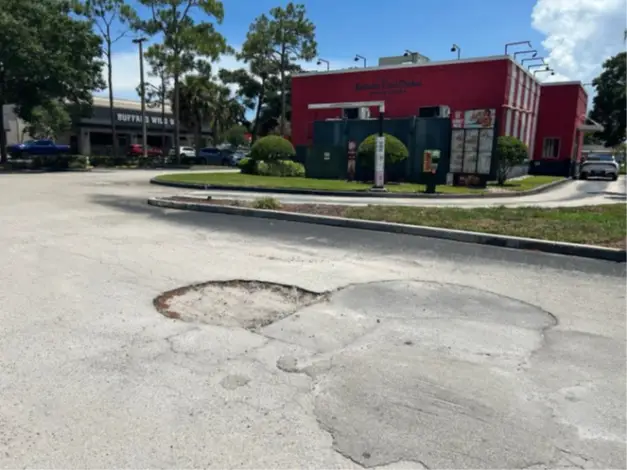
Why Do Potholes Keep Coming Back?
Potholes keep reappearing when the condition responsible for the original pavement failure remains after the repair.
A pothole is often the visible result of deterioration somewhere within the pavement structure.
Water may have entered through cracks. Poor drainage may have weakened the base. The pavement may have inadequate thickness for heavy vehicles. The original asphalt patching may have lacked proper preparation and compaction.
In other cases, the surrounding pavement may already be deteriorating.
If a contractor fills the hole while leaving unstable material beneath or around the pothole, the repaired section may not last.
The most effective solution begins with determining why the pavement failed in the first place.
1. The Base Beneath the Pothole Is Still Weak
Asphalt pavement depends heavily on the layers beneath the visible surface.
A properly constructed pavement system typically relies on a stable, compact foundation capable of distributing the passage of vehicles across the road bed or parking area.
When the road base becomes unstable, the asphalt above loses support.
Imagine placing new asphalt over a soft, saturated, or poorly compacted section. The surface may initially look smooth, but repeated traffic loads can cause the repaired section to move.
Cracks form, water enters, and eventually the patch may sink or break apart.
A full-depth repair may be necessary when the failure extends below the surface. This approach removes deteriorated asphalt and allows the underlying materials to be inspected and corrected before new pavement is installed.
2. Poor Drainage Keeps Sending Water Into the Repair
Water and traffic are a damaging combination when asphalt is already compromised.
Poor drainage can allow rainwater to collect around the edges of a patch or flow into nearby cracks.
Once water reaches beneath the pavement, it may weaken supporting materials and contribute to erosion or movement.
This is particularly important for parking lots and driveways with:
- Standing water
- Low spots
- Blocked drainage paths
- Cracks around repaired areas
- Depressions near drains
- Water flowing beneath pavement edges
Repairing potholes without correcting a significant drainage problem can allow new potholes to develop nearby.
The patch itself may remain intact while the surrounding pavement begins failing.
3. The Pothole Wasn’t Properly Prepared
Preparation and compaction are critical parts of durable asphalt patching.
Simply placing repair material into a hole filled with loose aggregate, dirt, water, or deteriorated asphalt can result in a weak repair.
Depending on the repair method and site conditions, preparation may involve removing unstable material, establishing sound edges, cleaning the area, correcting the base, and preparing the existing pavement to receive the patch.
The repair material then needs appropriate compaction.
If material is not properly compacted, air voids and movement can reduce the stability of the repair.
Vehicle traffic can then cause the patch to settle, loosen, or deteriorate.
Good pothole repair is therefore about much more than filling an empty space.
4. A Temporary Cold Patch Was Used as a Long-Term Solution
Cold patch materials can be useful for certain repairs, particularly when immediate temporary service is needed or conditions do not allow another method.
However, a standard cold patch should not automatically be treated as a permanent repair for every pothole.
A cold patch placed into an inadequately prepared hole may loosen or deform under traffic over time.
This can be especially problematic in areas experiencing heavy traffic or frequent turning movements.
Hot-mix asphalt may be used for more permanent repair strategies when weather conditions, project size, and other factors make it appropriate.
The key is selecting a repair method based on the actual pavement failure instead of assuming one material works for every situation.
5. The Surrounding Asphalt Is Already Failing
Sometimes the problem is not the patch.
It is the asphalt around it.
If the surrounding pavement contains widespread cracks, alligator-style deterioration, raveling, depressions, or other signs of structural weakness, installing one small patch may only move the failure to the edge of the patch.
The new material can be stronger than the existing road surface.
Traffic loads then continue stressing the weaker surrounding asphalt.
Eventually, cracks may form around the edges and new potholes may appear next to the repaired section.
A professional assessment should therefore evaluate a larger area than the visible hole.
6. Heavy Traffic Is Overloading the Pavement
Traffic over time contributes to pavement wear.
A residential driveway serving passenger vehicles has different structural demands than commercial parking lots regularly used by delivery trucks, waste collection vehicles, buses, or other heavy vehicles.
If the pavement structure was not designed or constructed for those loads, repeat potholes can occur.
Heavy traffic may cause weak areas to flex repeatedly.
When the base is unstable or asphalt is deteriorated, the repeated loading can accelerate cracking and pothole formation.
In these cases, repeatedly applying small patches may not provide the best long-term value.
The pavement may need full-depth repairs, a structural evaluation, or more extensive rehabilitation.
7. Water Keeps Entering Through Nearby Cracks
Even when the pothole itself is repaired correctly, adjacent cracks can allow moisture back beneath the pavement.
Rainwater follows available pathways.
If cracks surrounding the repaired area remain open, moisture may reach the base and undermine pavement beside the patch.
This is why crack maintenance can be an important part of preventing potholes.
The repair strategy should consider the repaired section and surrounding pavement as part of the same system.
Professional asphalt repair sebastian fl and similar pavement repair work should evaluate cracks, drainage, deterioration, and base conditions instead of focusing exclusively on the visible hole.
What About Freeze-Thaw Damage?
The freeze-thaw cycle is a major cause of pothole formation in colder climates.
Water enters pavement cracks, temperatures drop, and the trapped moisture freezes and expands. When temperatures rise, the ice begins to melt and thaw.
Repeated freezing and thawing can widen openings and weaken pavement.
That process helps explain why many northern roads develop significant potholes after winter.
However, freeze-thaw is not the primary concern in warm Florida locations.
In Florida, recurring potholes are more commonly associated with rainfall, water infiltration, drainage problems, pavement aging, traffic loads, base weakness, and construction conditions.
Understanding the local climate helps ensure the correct cause is addressed.
Why Repairs Often Fail Around the Edge of the Patch
The edge of the patch is an important transition point between new and existing asphalt.
If the surrounding pavement is weak, poorly prepared, or cracked, water can enter along this transition.
Vehicle tires also place stress on the joint between materials.
A repair that looks solid in the center may therefore begin deteriorating around the edges.
Good preparation helps create a stable transition, but the condition of the existing road or parking lot still matters.
If the surrounding asphalt has reached an advanced stage of deterioration, a larger repair area may be necessary.
Why Potholes Keep Coming Back After Asphalt Repairs in the Same Places
When property owners see why potholes keep coming back after asphalt repairs, one pattern becomes clear: repeat failures often indicate that something beyond the surface needs attention.
If a pothole repeatedly returns in the exact same places, investigate what is happening beneath and around the repair.
Questions to consider include:
- Does water collect in this location?
- Is the base stable?
- Are cracks allowing water beneath the pavement?
- Is the surrounding asphalt deteriorated?
- Does the area carry unusually heavy vehicles?
- Was the previous patch intended as a temporary fix?
- Was the material properly compacted?
- Is the pavement sinking or moving?
Finding the root cause is more useful than repeatedly adding patch material.
What Is the Best Way to Permanently Fill Potholes in My Driveway?
There is no single repair method that is permanently appropriate for every pothole.
The best approach depends on why the pothole developed.
For a localized failure where surrounding pavement remains stable, a properly prepared patch using an appropriate asphalt material may provide a durable repair.
If the base has failed, however, simply filling the surface is unlikely to solve the problem.
A more comprehensive repair may require removing deteriorated pavement, excavating unstable material, rebuilding and compacting the base, and installing new asphalt.
This is often described as a full-depth repair.
If poor drainage caused the failure, drainage should also be addressed.
The most durable repair is one that corrects the conditions causing the pothole—not merely one that uses the most expensive patch material.
Is There a Permanent Solution to Potholes?
No asphalt repair can guarantee that pavement will never deteriorate again.
Asphalt is exposed to traffic, water, sunlight, oxidation, temperature changes, and natural aging.
However, recurring potholes can often be significantly reduced by addressing their underlying causes.
That may involve:
- Correcting poor drainage
- Rebuilding an unstable base
- Using proper compaction
- Repairing surrounding cracks
- Removing deteriorated pavement
- Performing full-depth patching
- Resurfacing appropriate pavement
- Repaving severely failed areas
- Matching pavement structure to traffic demands
A permanent repair strategy means correcting the existing failure as completely as practical, not claiming the pavement will last forever.
What Is the Average Lifespan of Asphalt Pavement?
There is no universal lifespan for every asphalt driveway, roadway, or parking lot.
How long asphalt pavement lasts depends on construction quality, climate, base preparation, drainage, pavement thickness, traffic, maintenance, and other site conditions.
Well-constructed pavement that receives appropriate maintenance can remain serviceable for many years.
Poor drainage, heavy vehicles, inadequate compaction, neglected cracks, or structural deficiencies can shorten its usable life considerably.
Rather than relying on age alone, property owners should evaluate actual pavement condition.
A relatively old surface with isolated deterioration may still be a good candidate for targeted maintenance. A newer pavement with widespread base failure may require more substantial work.
When Should You Patch, Resurface, or Repave?
Choosing between patching, an asphalt overlay, and repaving depends on the extent and depth of the damage.
Patch Isolated Failures
Patching may work well when deterioration is limited to specific areas and the surrounding pavement structure remains sound.
Resurface Widespread Surface Deterioration
An asphalt overlay may be considered when surface deterioration is more widespread but the underlying pavement has sufficient structural integrity.
Existing problems need to be evaluated and appropriately repaired before an overlay is installed.
Otherwise, deterioration may reappear through the new surface.
Repave When Structural Failure Is Extensive
If large areas have failed because of an unstable base, widespread cracking, major drainage problems, or advanced deterioration, extensive reconstruction or repaving may provide better value than continuing with isolated parking lot repairs.
A pavement contractor should assess the site before recommending the scope.
Can You Prevent Potholes From Forming?
Not every pothole can be prevented, but proactive road maintenance and asphalt maintenance can reduce the likelihood of premature failure.
Useful steps include:
- Repairing appropriate cracks before water penetrates deeper
- Maintaining proper drainage
- Addressing standing water
- Repairing small failed areas promptly
- Monitoring pavement around previous patches
- Keeping drains and drainage paths clear
- Evaluating pavement used by heavy vehicles
- Scheduling periodic inspections
Preventative maintenance works best before significant structural deterioration occurs.
Once the road base has failed, surface treatments alone may not be enough.
Warning Signs That a Previous Pothole Repair Is Failing
Property owners should inspect previously repaired areas periodically.
Watch for cracking around the pothole patch, sinking, loose gravel, raveling, water collecting along the edge, or separation between new asphalt and surrounding pavement.
If a repaired section begins moving or sinking, the issue may extend beneath the surface.
New potholes forming beside an old patch can also indicate that the surrounding pavement is losing structural integrity.
Early inspection can help determine whether another small repair is appropriate or whether the site needs a more comprehensive solution.
Stop the Cycle of Recurring Potholes
Understanding why potholes keep coming back after asphalt repairs can save property owners from repeatedly paying to treat the same surface symptom. Weak base materials, poor drainage, inadequate compaction, water infiltration, heavy traffic, deteriorated surrounding asphalt, and inappropriate patching methods can all contribute to repeat failure.
True Lines, Inc. provides asphalt repair services for driveways, commercial parking lots, and other paved surfaces. Instead of simply filling a hole and hoping it lasts, a professional evaluation can identify whether the pavement needs patching, drainage improvements, crack repair, resurfacing, or a full-depth repair.
If potholes keep reappearing weeks or months after previous repairs, it is time to look beneath the pavement and identify the root cause.
Call True Lines, Inc. at (772) 349-4669 to discuss recurring potholes and asphalt repairs. The right combination of diagnosis, preparation, compaction, drainage management, and pavement repair can provide a longer-lasting solution and help prevent small failures from becoming larger, more expensive problems.


